No flesh-eating bacteria in local Gulf water
UPDATE June 29, 2016 10PM
Glenn Burns, the Chief Meteorologist at WSB-TV has issued a statement about his report, which we talk about in this article. A copy of that clarification issued minutes ago is linked below.
======================
Original Story: June 29, 2016 9:30 PM
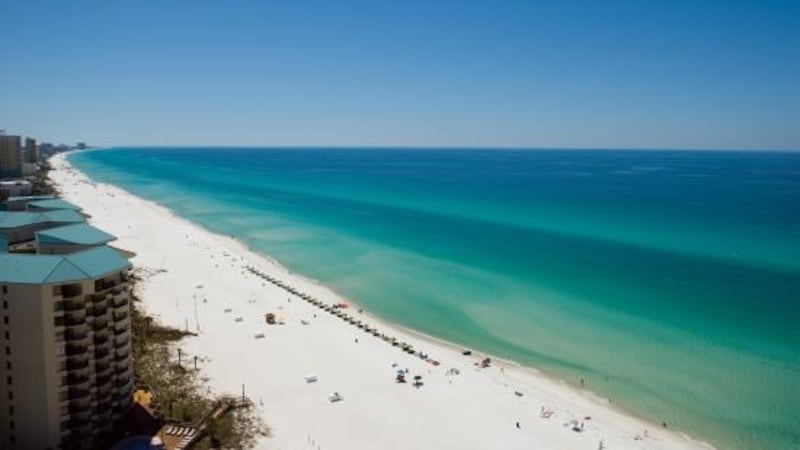
Despite what an Atlanta TV station claimed on-air and on its website, no flesh-eating bacteria has been detected in waters off Florida Panhandle beaches.
Beaches are open and the water is fine. That's the message tourism leaders want to make sure the public knows in the wake of some incorrect information from a television station in Atlanta.
WSB-TV Chief Meteorologist Glenn Burns took to social media and the airwaves Wednesday warning people to stay out of gulf waters due to "toxic fecal bacteria." In a tweet with a link to a station story, Burns wrote "Health departments issuing NO SWIM ADVISORIES for beaches from Louisiana to Florida Panhandle."
On the air Burns talked about the advisories while standing in front of a graphic highlighting Okaloosa County and Walton County in a bold red outline with the words "NO SWIM ADVISORY TOXIC FECAL BACTERIA" on it, and listing areas like Fort Walton Beach, Destin, Miramar Beach, Seaside and Rosemary Beach.
Here's the text of what he said on the air at 4:31 pm local time. A video on WSB's Facebook page of this broadcast had been viewed more than 1.5 million times in less than 5 hours Wednesday.
"If you're headed down to the Florida Panhandle beaches to cool off this weekend, be advised now, "No Swim" advisories are being issued by the National Weather Services and toxic fecal bacteria big problem now Fort Walton Beach, Destin, Miramar Beach, Seaside and Rosemary Beach. So "No Swim" advisories are in effect for really toxic levels of fecal bacteria. That along with very toxic blue-green algae. Now, you're gonna see signs if you're headed down to these beaches that are posted where we have these "No Swim" advisories. So just be advised that when you head down there, we could see these toxic levels of fecal bacteria continuing and very dangerous to swim in these waters. And you know they call this kind of the flesh-eating bacteria and that's what we're dealing with now in these Florida Panhandle beaches. So just wanted to advise you of that and again the local health departments will be posting signs all along those Florida beaches to keep you advised as you head down there this holiday weekend."
But there's a problem. The NWS doesn't issue swimming advisories Burns refers to and never has. The Florida Department of Health, working in conjunction with county offices does as part of the DOH's Healthy Beaches Program. A story on the WSB website initially mimicked what Burns said about the NWS issuing advisories but was changed to reflect the correct information.
Also, the "flesh-eating" bacteria Burns referred to in his broadcast is necrotizing fasciitis (flesh eating disease) which can be caused by vibrio vulnificus, NOT enterococci (fecal bacteria). It's elevated levels of enterococci *NOT vibrio vulnificus* which prompted a health advisory at six testing locations in Okaloosa County and "No Swim" advisories at two testing locations in Walton County.
The areas in Okaloosa County covered by the health advisory are:
Garniers Park
Poquito Park
Rocky Bayou State Park
East Pass
Clemente E. Taylor Park
Henderson Beach.
In Walton County the affected areas are:
County Park (Miramar)
Blue Mountain Beach
So what is all this testing, why is it done and what does it all mean?
FDOH's Healthy Beaches Program covers weekly water-quality testing done every year from March through October. The program has done weekly testing since 2002.
Testing is done at seven locations in Walton County, thirteen locations in Okaloosa County, ten locations in Bay County, and six locations in Gulf County. Besides the already mentioned locations, all other testing locations in Okaloosa, Bay, Walton and Gulf Counties came back as either "good" or "moderate."
So what is enterococci? According to the Florida Department of Health website, enterococci "are enteric bacteria that normally inhabit the intestinal tract of humans and animals. The presence of enteric bacteria can be an indication of fecal pollution, which may come from stormwater runoff, pets and wildlife, and human sewage. If they are present in high concentrations in recreational waters and are ingested while swimming or enter the skin through a cut or sore, they may cause human disease, infections or rashes."
So what are the levels used in testing? From the DOH website:
"According to studies conducted by the EPA, enterococci have a greater correlation with swimming-associated gastrointestinal illness in both marine and fresh waters than other bacterial indicator organisms, and are less likely to "die off" in saltwater. If an enterococci result were observed to exceed 70 colony forming units per 100 milliliters of beach water sampled and a resampling result also exceeds this value, then an "Advisory" would be issued for the sampling site."
Florida Healthy Beaches Program Categories are:
Good = 0-35 Enterococci per 100 milliliters of marine water
Moderate = 36-70 Enterococci per 100 milliliters of marine water
Poor = 71 or greater Enterococci per 100 milliliters of marine water
So what can cause levels to fluctuate? A heavy rain which causes runoff into gulf waters is usually the culprit. If you have a long dry stretch followed by a heavy rain, enterococci levels can spike, but usually return to good levels within a couple of days.
The most recent testing was done Monday June 27 and the results were released Wednesday June 29. No word yet on if additional testing will be done.
Who's most at risk? Generally people with weakened immune systems are most at-risk. If you're otherwise healthy, you'll probably never notice anything out of the ordinary. If you have something like a big cut or wound, it's best to stay out of the water until that heals, no matter what the test results say.
Local hotels and condominiums are reporting calls from people looking to cancel their vacations based off of the report on WSB that has spread like wildfire on social media.
Before the report aired, in Panama City Beach, numerous hotels are reporting strong numbers for bookings for the upcoming 4th of July weekend. It was a similar story in Walton and Okaloosa Counties.
Local tourism leaders reached out to WJHG and WECP to help clarify the situation.
"As the front desks at the Visitor Center and the chamber is aware, there is a story going around that's causing some confusion," wrote David Demarest with the Panama City Beach Convention and Visitors Bureau. "The end point should be that this does not apply to Panama City Beach, and monitoring shows that our beaches and water are in good condition."
Okaloosa County sent out a tweet saying "Okaloosa County beaches are NOT closed to flesh eating bacteria or any bacteria!"
And the Walton County Sheriff's Office sent a tweet linking to the local test results.
Best advice: Use common sense and stay informed. If there's a serious health risk to the general public, you'll hear about it from us here at WJHG and WECP.
===========
Edited to clarify necrotizing fasciitis can be caused by vibrio vulnificus.